

The Guardian has condemned online abuse and harassment of its journalists in the week after the death of Cambridge academic Jason Arday.
The newsbrand said much of the abuse has had a “racialised element”.
Arday died aged 41 on Friday 14 August after weeks of scrutiny over allegations that he plagiarised his PhD thesis and other research, and claims he had embellished or made-up some of his other achievements, such as running 600 miles in six days.
Guardian journalists who wrote about Arday and his claims in the weeks before his death are among those who have been targeted with abuse. Other outlets reporting on the story included The Telegraph, The Times, The Spectator, the Daily Mail and Novara Media.
Jolyon Maughm KC, founder of advocacy group Good Law Project, accused The Guardian of having “borrowed freely from attack lines carried in the Mail, The Times, the Telegraph and elsewhere”.
He also accused the journalist who wrote The Guardian’s first investigation into Arday’s claims, published on 1 August after months of verification, of having “beef” with him.
The Guardian said in a statement: “Jason Arday first approached the Guardian more than a year ago. The Guardian’s reporting was built on months of careful review and a commitment to responsible journalism. Our commentary was nuanced and balanced. We stand by our journalists, who pursued their work with great care.
“We welcome legitimate debate and scrutiny of the Guardian’s journalism, but we condemn the false allegations and targeted social media harassment, much of it with a racialised element, that have been directed at individual Guardian journalists in connection with their work – in particular the false claim that our coverage was driven by any personal conflict with Professor Arday.
“Our sympathies are with Professor Arday’s family and friends.”
The Guardian is not a member of a regulator but has invited complaints to be sent to its readers’ editor.
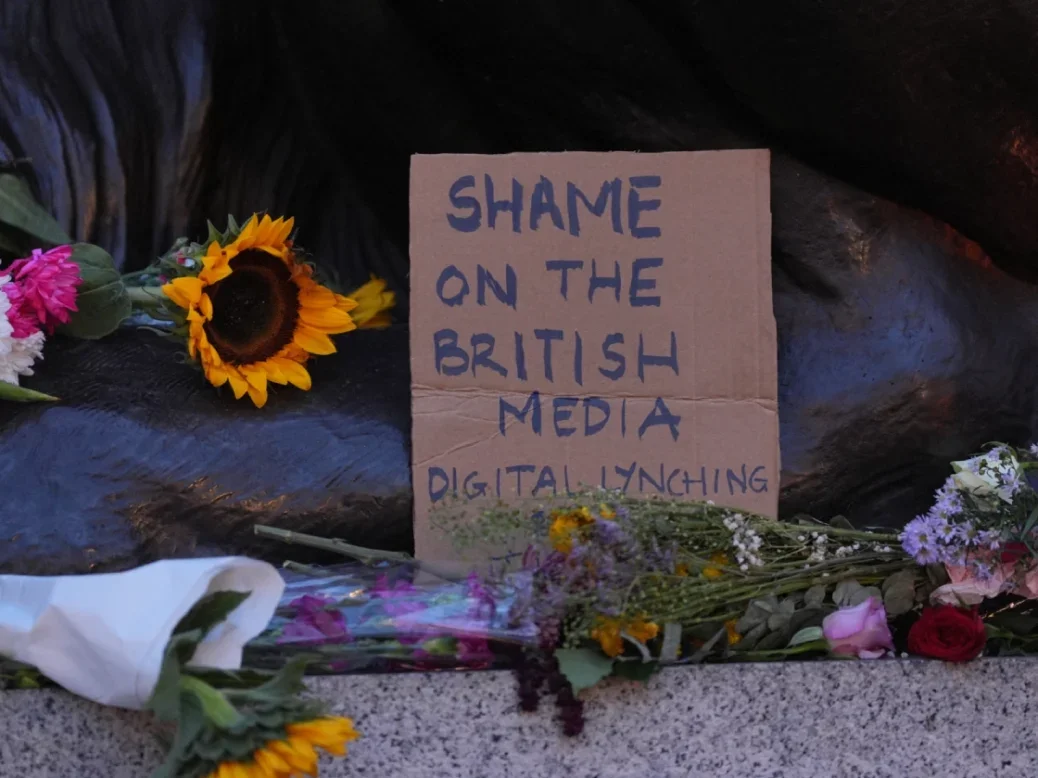
At a vigil organised by Stand Up to Racism in Trafalgar Square on Monday, posters were left that included phrases such as “Shame on the British media – digital lynching” and “UK media, blood on your hands yet again!”
Lists of named journalists who had written about Arday have been circulated on social media, including via media ‘bias’ platform Newscord and a long missive from novelist Will Self.
Former Spectator, Daily Telegraph and Sunday Telegraph editor Charles Moore wrote this week that “the press found out substantial untruths, seriously damaging to the reputation of one of our two greatest universities and reported them. That is what you would expect of a ‘responsible’ press. What else could it have done?”
The National Union of Journalists was criticised by some members of the media for sharing a statement that, they felt, implied the story should not have been covered.
It did condemn attacks against journalists but did not condemn the legal threats (including a police warning) that stopped Times Higher Education journalist Jack Grove from being able to cover the plagiarism allegations before the story eventually came out in a Substack post by so-called “race realist” Nathan Cofnas.
NUJ general secretary Laura Davison said: “Arday has been the subject of intense media coverage and public discourse, and his death has caused deep concern and anger. It is appropriate that this strength of feeling is recognised and there should be a period of careful reflection. All media organisations should reflect on their coverage and we will be consulting our members for their views and experiences.
“There has been significant criticism of the media, rooted in legitimate concerns over aspects of coverage. However it is important to recognise the role of journalists in keeping the public informed, and to avoid language that brands all media workers as unprofessional and unethical.
“We condemn attacks against individual journalists – including Black journalists – who have been targeted with threats, harassment or racial slurs following Arday’s death. These attacks risk fuelling divisions and deepening the distress already felt by so many. No worker should be subject to abuse while doing their job. Employers must provide proper support and safeguarding to journalists affected.
“The NUJ Code of Conduct is an ethical framework for journalists carrying out their work. The Code states that journalists should not produce ‘material likely to lead to hatred or discrimination on the grounds of a person’s age, gender, race, colour, creed, legal status, disability, marital status, or sexual orientation.’
“That one of the highest profile critics of Arday was Nathan Cofnas, a former Cambridge academic and self-described ‘race realist’, is deeply concerning. Racism, ableism and pernicious rhetoric against diversity, equity and inclusion has become increasingly normalised in our society. The NUJ vigorously opposes the rehabilitation of discredited ideas on race in academia, and emphasises the importance of journalistic verification – including checking the background and motivation of sources.”
There are also concerns over calls for an Arday’s Law, which would limit the number of articles that can be written about an individual during a certain timeframe.
Amnesty UK’s Disabled People’s Human Rights Network, Student Action Network, Anti-Racism Network, Feminist Network and Queer Rights Network issued a joint statement backing the idea: “Professor Arday is not the first victim of our toxic, unregulated media culture and unless there is systemic legislative change, he won’t be the last, as networks we therefore support the creation of Arday’s Law.”
This is despite freedom of expression being one of the core principles behind Amnesty International’s human rights work. Spectator political editor Tim Shipman said on X: “Add Amnesty to the list of people who want to muzzle the press.”
Email pged@pressgazette.co.uk to point out mistakes, provide story tips or send in a letter for publication on our "Letters Page" blog
